Sunday, 18 April 2010

Exposicao de Comboios Reais em Utrecht

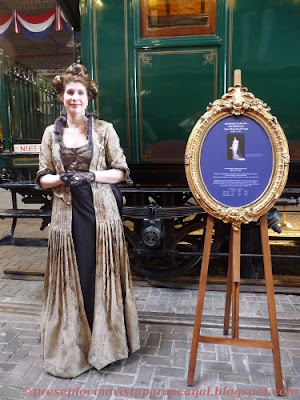
"Royal Class,vorstelijk reizen" in Spoorwegmuseum, Utrecht


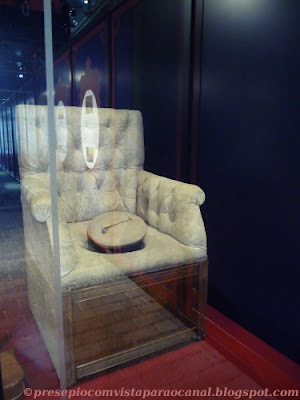
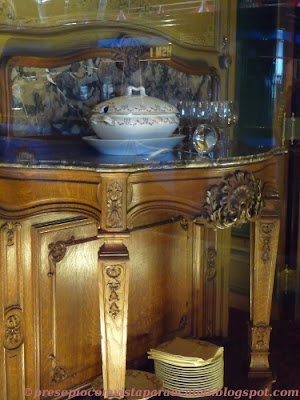
This piece of furniture it is from the Royal Train of Czar Alexandre II of Russia (1870)

From Spoorweg Museum


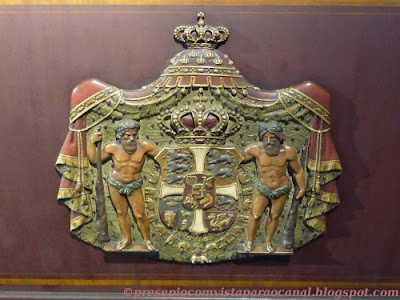
Royal Train of Cristiano IX of Denmark (known as "The Father- in-Law of Europe")...

From Spoorweg Museum


From Spoorweg Museum


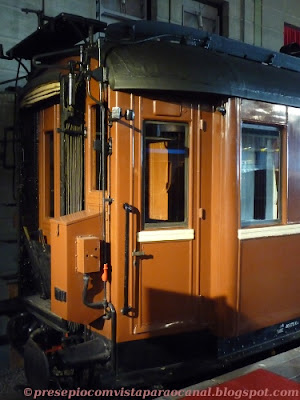
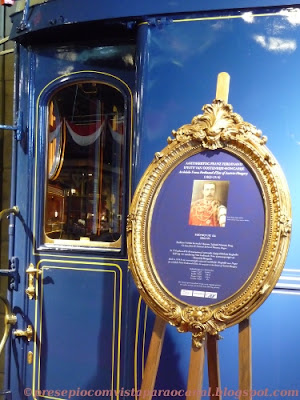
Royal Train's Salon of the Royal Prince, Franz Ferdinand of Austria-Hungary ( he was murdered in Sarajevo; the major consequence of this fact was the 1st World War).

From Spoorweg Museum


From Spoorweg Museum


The cook of King Edward VII of England...;-)

From Spoorweg Museum


Royal Train's Salon of Queen Adelaide of England (1842)

From Spoorweg Museum


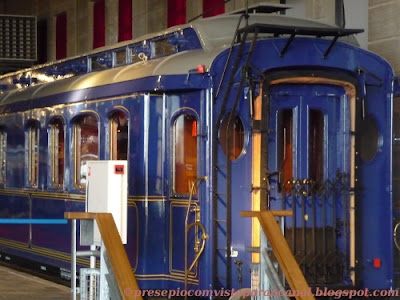
Royal Dining Train Carriage of Albert I of Belgium (1912)

From Spoorweg Museum


From Spoorweg Museum


Well, there is more to see ;-) What about a visit to this exhibition? ;-)

Saturday, 17 April 2010

Portuguese Royal Train in the Spoorwegmuseum in Utrecht

Yesterday...

I visited the exhibition "Royal Class,vorstelijk reizen" at the Spoorwegmuseum in Utrecht, specially to see...:-)

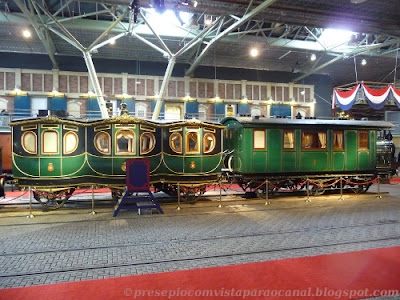
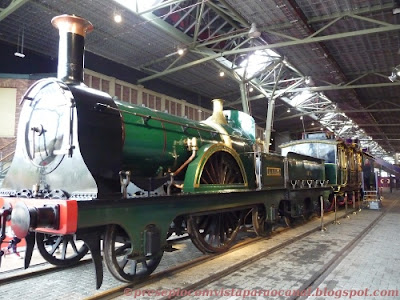
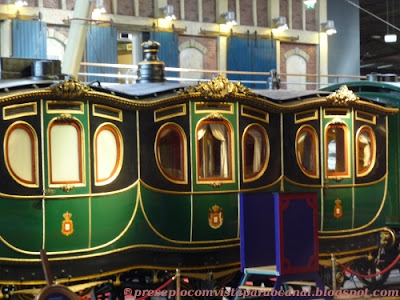
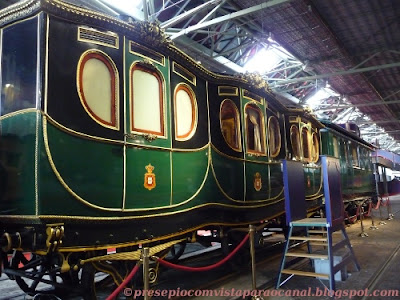
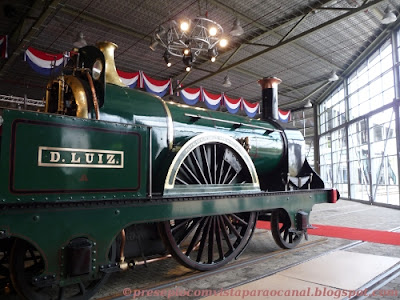
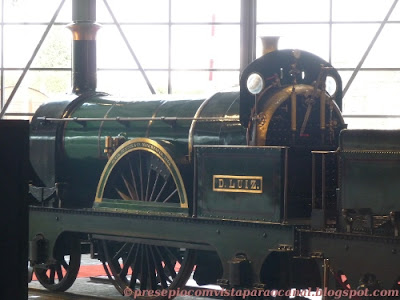
The Portuguese Royal Train (Royal Wagon of D. Maria Pia, Locomotive of King D. Luis I and the Prince's Wagon) :-)

From Spoorweg Museum


From Spoorweg Museum


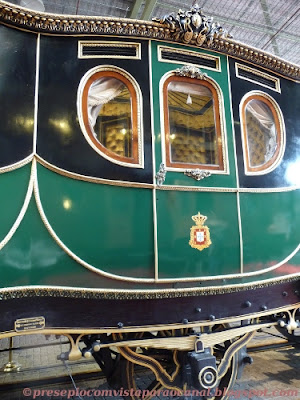
The Royal Wagon of D. Maria Pia was given to her by her father, King Vítor Emanuel II of Italy, when she married with King Luis I of Portugal, in 1862.

From Spoorweg Museum


From Spoorweg Museum


From Spoorweg Museum


Maria Pia of Savoy (Torino,14 March 1847 - Stupinigi,Parco Reale,5 July 1911) was also known in Portugal as "angel of charity" or "mother of the poor" for her compassion and work on social causes.

From Spoorweg Museum


The locomotive D.Luiz is unique in the world and has won the golden medal in the London International Exhibition during the Industrial Revolution.

From Spoorweg Museum


King Dom Luis I (Lisbon, 31 October 1838 – 19 October 1889 in Cascais) had a calm and pacifying temperament.
He was a Consitutional Monarch model, respectful of public freedom.
During his reign, some of his acomplishments deserve special mention:
the beginning of the Lisboa and Leixões maritime port construction;
the extension of the road and railroad network;
the construction of Crystal Palace, nowadays called the Rosa Mota Pavillion;
the abolishing of the death penalty for civil crimes;
the abolishing of slavery in the Portuguese Kingdom;
the publishing of the first portuguese Civil Code.

From Spoorweg Museum


You can visit this exhibition until the 05th of September 2010.

More photos tomorrow ;-)

Thursday, 15 April 2010

Expat Life:Traditional Dutch Stairs

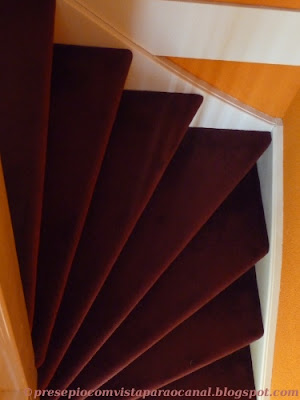
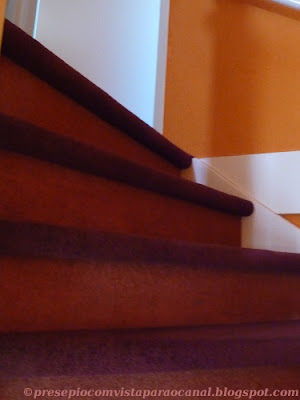
Yes, I 've already fallen in my traditional Dutch stairs...

From Coisas Minhas


It was in a December evening during the removals...

From Coisas Minhas


I went to the Hospital in the morning with a broken toe in my right foot...

From Coisas Minhas


After a X-Ray and a careful examination of my legs and feet, I went home more relaxed ...

From Flores

Wednesday, 14 April 2010

Gardening Dutch Flyers

I received many flyers during the week, specially in the weekend!
Lately, more and more flyers about flowers, gardening, garden furniture, garden tools,...
There are so many offers, so many options...

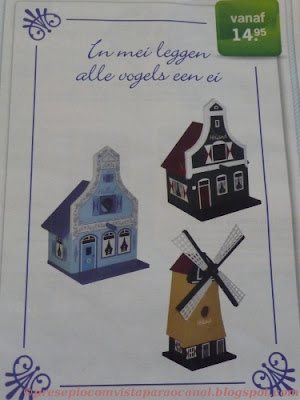
But these are my favorite ones...with bird houses...

Sjopze

Typische Hollandse Vogelhuisjes ;-) They are so cute!

"In mei leggen alle vogels een ei."/ Em Maio, todos os passaros põem um ovo./ In May all the birds lay one egg.

From Coisas Minhas


Well, Spring has begun already... ;-)

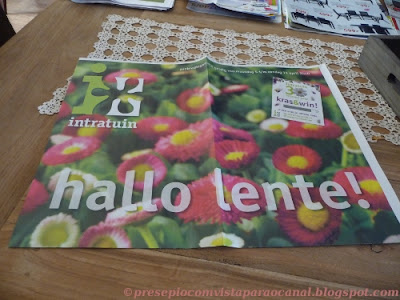
Intratuin

Hallo Lente! /Ola, Primavera!/Hello Spring!

I like this flyer... so many bloemen (flores/flowers)!

From Coisas Minhas


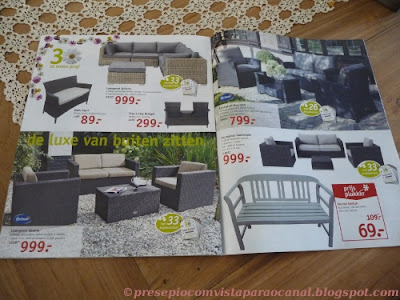
The Dutch like their gardens very much... :-) and when Spring arrives...

Aan de slag!/ Ao trabalho!/ It's time to work!

From Coisas Minhas


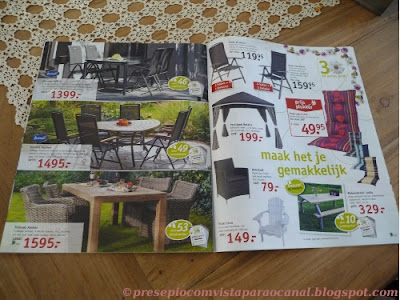
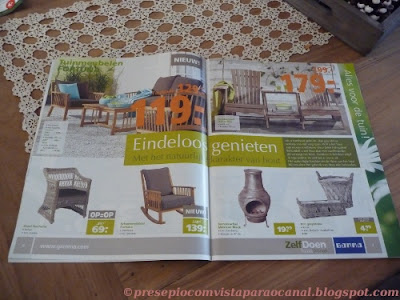
It's time to buy some Tuinmeubelen/Mobiliario de Jardim/Garden Furniture...

tuinset (conjunto de jardim/garden set)
tafel (mesa/table)
stoel (cadeira/chair)
kussens (almofadas/pillows)

...and sitting outside (buiten)...in the achtertuin or in the voortuin...

From Coisas Minhas


From Coisas Minhas


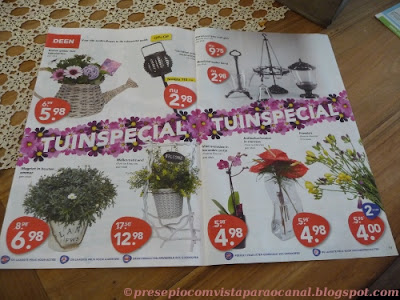
Deen

It's time to buy a new vaas (vaso/vase) or new planten (plantas/plants)...

From Coisas Minhas


We should, of course, visit different stores and compare the prices...

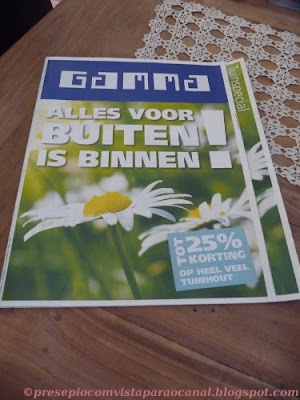
Gamma

Alles voor buiten is binnen!/ Tudo para o exterior esta aqui dentro!/Everything for the outside is inside!

From Coisas Minhas


Een moment voor jezelf!/ Um momento para si!/ One moment for yourself!

From Coisas Minhas


Eindeloos genieten!/ Prazeres sem fim!/Endless pleasures!

From Coisas Minhas


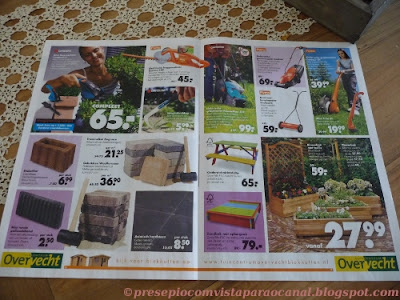
Overvecht

In a tuincentrum, we can find also...

kruiden (ervas/herbs)
fruitbomen (arvores de fruto/fruit trees)
rozemarijn (rosmaninho/rosemary)
olijfboom (oliveira/olive tree)

From Coisas Minhas


...and good stuff to take care of the gazon (relva/grass) and the bodem (solo/soil)...

meststof (fertilizante/fertilizer)
grasschaar (tesoura de relva/ grass cutter)
grasmaaier (maquina de cortar relva/lawnmower)
rubbermat (tapete de borracha/rubber mat)

From Coisas Minhas


More options are...

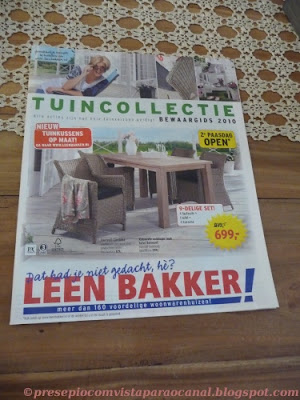
Leen Bakker

From Coisas Minhas


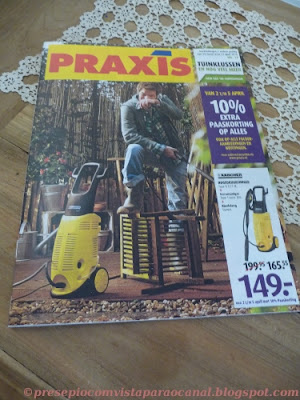
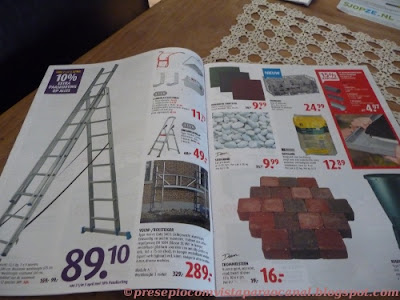
Praxis

From Coisas Minhas


From Coisas Minhas


Garden Gallery

From Coisas Minhas


4 Seasons Outdoor Furniture

From Coisas Minhas


So...

What do you think about the garden collections?
What is your favorite store?
What do you think about the prices?
How is your garden?
What do you like the most?
Share your experience if you want to. I'm quite new on this...this week, I worked very much, cleaning the achtertuin (backyard) and searching for information to get it more confortable...
There is so much to learn and do...so many stores to visit, prices to compare...I want something simple and gezellig (cosy), of course...What do you suggest?

Saturday, 10 April 2010

Koeksisters: another cross- cultural experience

A very delicious and sweet cross- cultural experience... this time with a South African acquaintance...Enjoy!

Koeksisters

From Coisas Minhas


Koeksisters are a traditional South African sweet dessert. "Koeksister" comes from the Dutch word "koekje", the diminutive of "koek" meaning "cake". It is a South African syrup-coated doughnut in a twisted or braided shape (like a plait). They are very sticky and sweet and taste like honey.
In South Africa, you'll find koeksisters popping up almost everywhere.

Do you want to know the recipe?

The koeksister syrup:

· 4 cups sugar
· 1 cup water
· 1 tsp cream of tartar
· ½ tsp tartaric acid
· 1 tsp vanilla essence or 1 tsp grated orange rind or 1 tsp ground cinnamon or 1/3 tsp ground ginger

Add the dry ingredients to the water and bring the mixture to the boil.
Allow it to simmer for 10 minutes or until syrupy.
Set the syrup aside to cool.
It is advisable to make the syrup first and to leave it in the fridge overnight.

The koeksister batter:

· 1 egg
· 2 cups flour
· 6 tbsp milk
· 6 tbsp margarine or butter
· 2 tsp baking powder
· 1 tsp salt

Sift the flour, baking powder and salt into a mixing bowl.
Cut or rub the margarine or butter into the dry ingredients.
Beat an egg thoroughly and add it to the milk. Add this to the flour mixture, taking care to handle as little as possible.
Refrigerate the dough for at least one hour.
Roll out the dough to a thickness of ¼ inch.
Cut into strips that are approximately 31/2 inches long and 1 inch wide.
Cut each strip into three lengthways, leaving one side uncut, and plait the pieces, pressing the cut ends together firmly.

Pre-heat vegetable oil in a deep pan and remove half of the syrup from the fridge.

Deep-fry the koeksisters in the oil until golden brown.
Drain them for a few seconds on absorbent paper.

Dip the koeksisters into the cold syrup, for a few seconds, whilst they are still hot.
This will seal the syrup outside and leave the inside of the koeksister dry in contrast.

The syrup will gradually become hot, so when you have done about half of the koeksisters take the remaining syrup from the fridge and use this for the balance of the koeksisters.

Thursday, 8 April 2010

Expat Life: Traditional Dutch Birthday Party

Masha, 6 years old, 31 March 2010

Birthday Party, 03 April 2010

Last Saturday, I went to a traditional Dutch birthday party.
Masha is now 6 years old. :-)

What is typical in a Dutch birthday party?

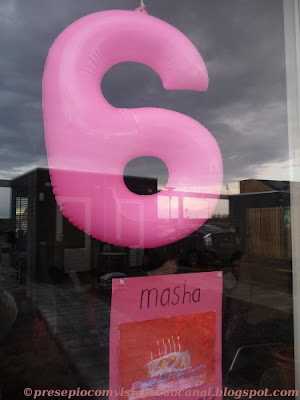
The age number in the front door...

From Pasen 2010


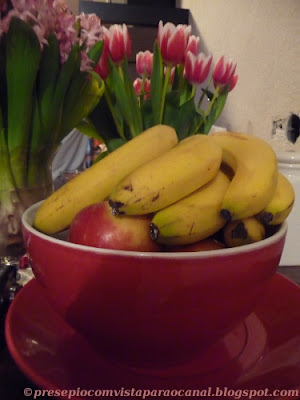
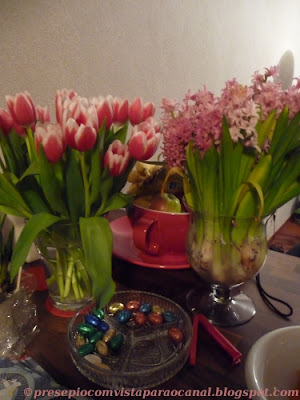
Flowers (Bloemen)...
Tulips (Tulpen), of course ;-)

From Pasen 2010


From Pasen 2010


The famous circle around the living room table where we, the adults, sit down and talk about this and that..:-)
A true Dutch tradition ;-)

A living room with pretty and cheerful decorations... :-)

From Pasen 2010


Meanwhile, Masha's parents offered coffee, tea, juice and, of course, a piece of the birthday cake...

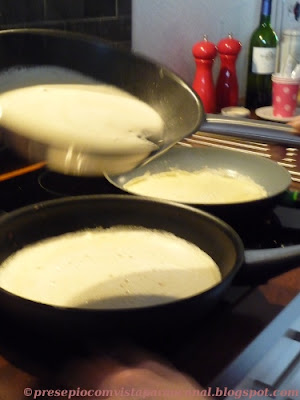
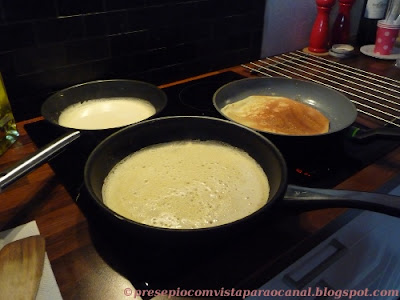
After a while, was time for these delicious pancakes ;-)

From Pasen 2010


From Pasen 2010


Masha and her friends, while waiting, played here with their PlayMobil....:-)

From Pasen 2010


Het was een heel leuk feest!!! Foi uma festa muito divertida!

Heel gezellig (cosy,pleasant)!!!

"Gefeliciteerd, Masha!" ...to your parents, grandparents, aunts, uncles and cousins too....:-)

(In the Netherlands, we must say " Gefeliciteerd" also to the relatives with whom we cross that day...:-)

M. and P., bedankt voor the invitation! I hope you like the post! :-)

Dank je wel! :-)

Sunday, 4 April 2010

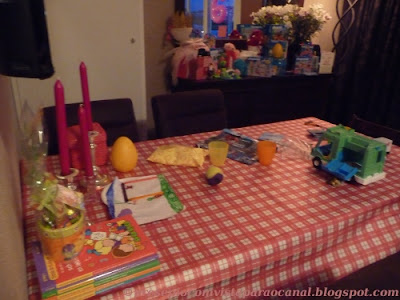
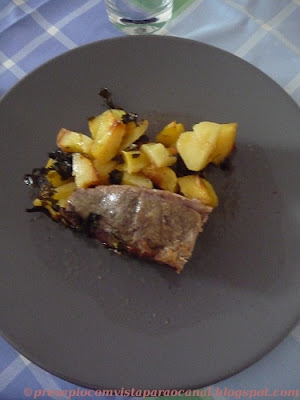
Traditional Portuguese Easter Lunch

From Pasen 2010


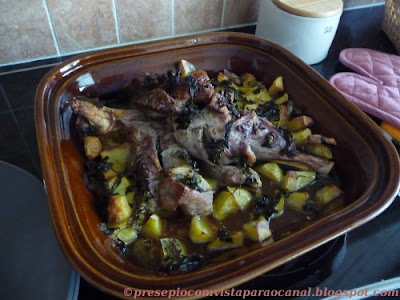
Roasted Lam Leg

One lamb leg with bone (1,5 - 2,0 Kg)
potatoes (1,0 - 1,5 Kg)
One big onion
4-5 garlic cloves
bunch of coriander
Salt
Pepper
Olive Oil

Clean and wash the leg, retrieving the extra fat (tallow) and the
smell glands (if still there), and make deep perpendicular cuts to the
bone. Peel the potatos, cut them in smaller pieces and wash them very
well. Place the leg in the middle of a clay tray (or an oven tray) and
distribute the potatos around the leg. If it seems that you might need
more potatos, just peel and cut some more, wash and add them to the
tray.

Salt the potatos and the mead with gross salt, opening a bit the leg
cuts so the salt can reach the inside of the meat (don't use too much
salt so that you can still taste the meat). Grind some pepper and
place it on top of the meat. Mash the garlic cloves and spread them
over the meat. Peel the onion and slice them in rings, which you
should distribute over the full tray (on top of both the potatos and
the meat). Wash the coriander and cut it in gross pieces, spreading
them over the tray. Fill the bottom of the tray with water (add a bit
more than just enough to cover the bottom) and season the meat and the
potatos with a bit of olive oil (don't use too much so it won't get
too greasy).

Place the tray in the oven and heat the oven at 180 celsius, leaving
it there for an hour. Keep checking if the tray is deying, and if it
is, add some water. After the hour check if the inside of the meat is
too rosy, and if you think it's needed, keep it for a bit more (The
cuts in the meat shouldn't so close to each other as the leg will
loose it's form, but should be close enough to allow the meat to be
well cooked).
Instead of coriander you may also use rosemary.

From Pasen 2010


Perna de borrego assada no forno

Uma perna de borrego (1,5 - 2,0 Kg)
Batatas (1,0 - 1,5 Kg)
Uma cebola grande
4-5 dentes de alho
Um ramo de coentros
Sal qb
Pimenta qb
Azeite qb

Limpar bem a perna de borrego, tirando os sebos extra e as glândulas
de cheiro (se ainda lá estiverem), e fazer cortes profundos
perpendiculares ao osso. Descascar as batatas, cortá-las em quartos
pequenos e lavá-las bem. Colocar a perna no centro de uma travessa de
barro e colocar as batatas à volta da perna. Se parecer que são
precisas mais batatas, cortar as suficientes e colocá-las na travessa.

Colocar sal grosso qb por cima das batatas e da perna, abrindo um
pouco os cortes da perna para que o sal também chegue ao interior (não
salgar demais porque irá retirar o sabor da carne). Moer pimenta por
cima da carne. Descascar os dentes de alho e esmagá-los por cima da
carne, espalhando pela superfície da perna. Descascar a cebola e
cortar em rodelas, espalhando-as pela travessa. Lavar bem o ramo de
coentros, cortar em pedaços grosseiros e espalhá-los pela travessa.
Colocar água suficiente na travessa de modo a cobrir o fundo e mais um
pouco. Regar a travessa com azeite, passando com o fio por cima das
batatas e da perna, mas não exagerando no azeite.

Levar ao forno durante uma hora a 180 graus. Ir verificando se a
travessa tem molho suficiente, e se estiver a secar adicionar mais um
pouco de água. Em vez de coentros, também se pode usar alecrim.
Passada a hora, verificar se o centro da perna ainda está rosado, e se
necessário, deixar estar mais um pouco no forno. Os cortes
perpendiculares ao osso devem ser suficientemente distanciados para
manter a forma da perna, mas de modo a permitir uma boa distribuição
do calor pela carne.