Showing posts with label Tessa de Loo. Show all posts

Wednesday, 3 February 2010

Lisboa e Fado por Tessa de Loo

We have been travelling around in the south of Portugal according to the words of Tessa de Loo and my photos of the places that she visited: Evora, Monsaraz, Tavira and Sintra.

Today we go to Lisbon, Portugal's capital, the city where I lived, studied and worked before I came to the Nederlands.
....

Lisboa/Lisbon

Tessa de Loo begins her story about Lisbon with the well known earthquake of 1755. If you want to know more about it, please click here.

"In 1755 werd Lissabon voor tachtig procent verwoest door een aardbeving, die gevolgd werd door een Tsunami: eerst trok de zee zich terug en keken de mensen op de kade geboeid naar de talloze scheepswrakken die nu bloot lagen, totdat tien minuten later huizenhoge golven zich over hen en de stad stortten."

(Tessa de Loo, Mijn Portugal)

About this beautiful city, let me point out some special places...

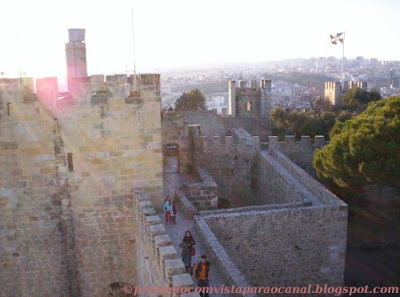
Castelo de Sao Jorge, Saint George Castle

From Portugal


"...is a Portuguese castle that occupies a commanding position overlooking the city of Lisbon, the capital of Portugal, and the broad Tagus River (Rio Tejo) beyond. The strongly-fortified citadel, which, in its present configuration, dates from medieval times, is located atop the highest hill in the historic center of the city. The castle is one of the main historical and touristic sites of Lisbon."

(From Wikipedia)

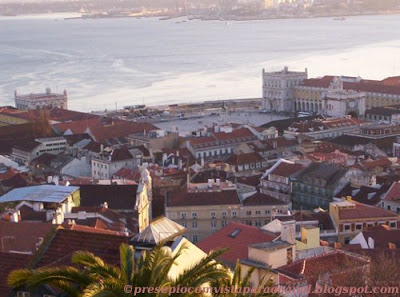
Rio Tejo/Tagus River e Praca do Comercio

From Portugal


"...is the longest river on the Iberian Peninsula. It measures 1,038 kilometers in length, 716 km of which are in Spain, 47 km as border between Portugal and Spain and the remaining 275 km in Portugal, where it empties into the Atlantic at Lisbon."

(From Wikipedia)

" The Praça do Comércio (...) English: Commerce Square) is located in the city of Lisbon, Portugal. Situated near the Tagus river, the square is still commonly known as Terreiro do Paço (...) ( English: Palace Square), because it was the location of the Paços da Ribeira (Royal Ribeira Palace) until it was destroyed by the great 1755 Lisbon Earthquake. After the earthquake, the square was completely remodelled as part of the rebuilding of the Pombaline Downtown, ordered by the Marquis of Pombal."

(From Wikipedia)

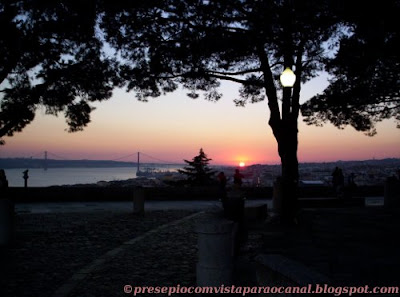
Ponte 25 de Abril/ 25 de Abril Bridge (the view from the Castle)

From Portugal


" The 25 de Abril Bridge (Ponte 25 de Abril "25th of April Bridge" (...) is a suspension bridge connecting the city of Lisbon, capital of Portugal, to the municipality of Almada on the left bank of the Tejo river. It was inaugurated on August 6, 1966 and a train platform was added in 1999. Because of its similar coloring, it is often compared to the Golden Gate Bridge in San Francisco, USA. In fact, it was built by the same company (American Bridge Company) that constructed the San Francisco-Oakland Bay Bridge and not the Golden Gate, also explaining its similarity in design. With a total length of 2,277 m, it is the 20th largest suspension bridge in the world. The upper platform carries six car lanes, the lower platform two train tracks. Until 1974, the bridge was named Salazar Bridge."

(From Wikipedia)

Torre de Belem (janela)/ Torre de Belem window (Manuelino style)


From Portugal


" Belém Tower (in Portuguese Torre de Belém (...) is a fortified tower located in the Belém district of Lisbon, Portugal, and is an UNESCO World Heritage Site (along with the nearby Jerónimos Monastery)[2] because it represents the Portuguese maritime discoveries during the era of the Age of Discoveries.[3] The tower was commissioned by King John II[4] to be both part of a defense system at the mouth of the Tagus River and a ceremonial gateway to Lisbon.[3]
The tower was built in the early sixteenth century and is a prominent example of the Portuguese Manueline style,[5] but it also incorporates hints of other architectural styles.[6] The structure was built from lioz limestone[7] and is composed of a bastion and the 30 meter (100 foot),[1] four story tower. It has incorrectly been stated that the tower was built in the middle of the Tagus and now sits near the shore because the river was redirected after the 1755 Lisbon earthquake. In fact, the tower was built on a small island in the Tagus River near the Lisbon shore.[6][8"

(From Wikipedia)

Have you ever heard about Manuelino Style?

" The Manueline, or Portuguese late Gothic is the sumptuous, composite Portuguese style of architectural ornamentation of the first decades of the 16th century, incorporating maritime elements and representations of the discoveries brought from the voyages of Vasco da Gama and Pedro Álvares Cabral.
This innovative style synthesizes aspects of Late Gothic architecture with influences of Spanish Plateresque style, downtown Italian, and Flemish elements. It marks the transition from Late Gothic to Renaissance. The construction of churches and monasteries in Manueline was largely financed by proceeds of the lucrative spice trade with Africa and India."

(From Wikipedia)

Tessa de Loo also refers Manuelino Style...

" Dankzij de koloniale rijkdommen uit het verleden is er een elegante, eigen architectuur ontstaan – een Portugese variant van de Barok en later van Art Deco. Tot in de uithoeken het land vind je paleizen, kerken, kathedralen en landhuizen in deze typisch Portugese stijl, maar ook pittoreske steden en dorpen, nogal eens in een staat van verval die weemoed oproept naar vervlogen tijden… geen onprettig gevoel eigenlijk, als je er op een zonnig terras met een glas vinho verde in de hand over kunt mijmeren."

...as well as Fado, the typical portuguese music and song, unique in the world.

" Zo is het ook met de fado. Hoewel door sommige fadistos tot een kunst verheven, is de fado vooral de muziek van het volk gebleven. Overal in het land vind je plaatselijke bekendheden en als je in een restaurant zit kan het zomaar gebeuren dat iemand opstaat (de kruidenier of apotheker van het stadje) om, de handen plechtig gekruist op de buik, een fado ten gehore te brengen."

Have you already heard a Fado from Amalia Rodrigues, Carlos do Carmo, Mariza, Cristina Branco or Dulce Pontes?

As we say in Portugal: "Silencio! Vai-se cantar o Fado!" or " Silence! Fado will be sung!"

Carlos do Carmo, Lisboa Menina e Moca


Carlos do Carmo, Os Putos


Carlos do Carmo, Um Homem na Cidade


(to be continued)

Friday, 29 January 2010

Monsaraz and Evora by Tessa de Loo

Alentejo, south province of Portugal

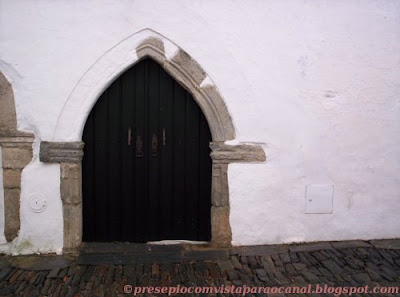
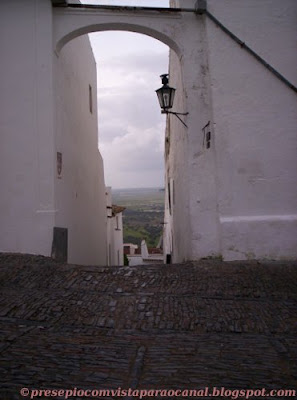
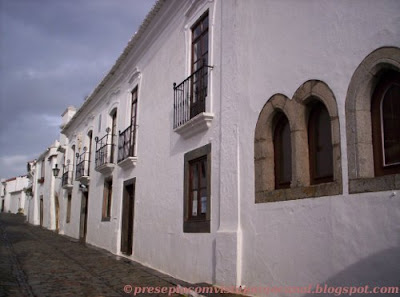
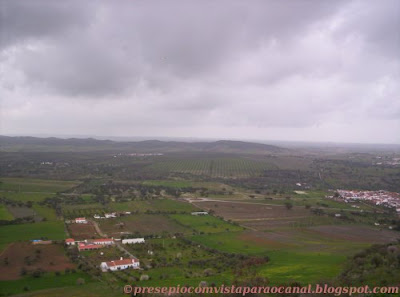
Monsaraz

"Tijdens de tocht langs de Spaanse grens domineren hooggelegen vestingstadjes als Monsarraz het landschap, van waaruit eeuwenlang het gevaar uit het oosten het hoofd moest worden geboden. Wie hier door de smalle straatjes slentert, voortdurend klimmend of dalend, voelt zich wel erg ver weg van de 21e eeuw." (Tessa de Loo)


Tessa de Loo has been also in Alentejo, where she visited Monsaraz, one of the fortress-towns, as she says (vestingstadjes), with an eminent position (hooggelegen) in the landscape (landschap) because of their defensive role nearby the frontier (grens) with Spain.

Monsaraz with its typical little streets (straatjes) where we can have constant up and down strolls, feeling quite far from the 21 st century...as she says and I agree...

I love Monsaraz, for several reasons, it's a very special place for me :-)

From Portugal


From Portugal


From Portugal


From Portugal


From Portugal


From Portugal


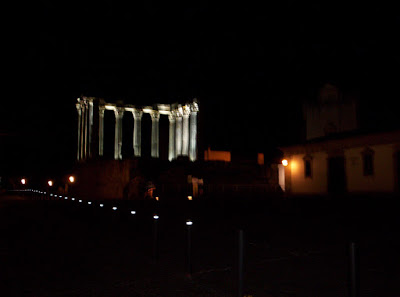
In Evora, UNESCO World Heritage Site, Tessa points out the landmark of the city, the Roman Temple...

" Via Evora, gebouwd rond de resten van een Romeinse tempel..." (Tessa de Loo)

Templo Romano, Evora

From Portugal


"The Roman Temple of Évora (also referred to as the Templo de Diana, after Diana, the ancient Roman goddess of the moon, the hunt, and chastity) is an ancient edifice in the city of Évora, Portugal. The temple is part of the historical centre of the city, classified as a World Heritage Site by UNESCO. It is one of the most famous landmarks of Évora and a symbol of Roman presence in Portuguese territory."

(From Wikipedia)

(to be continued)

Thursday, 28 January 2010

Tavira" is het mooiste stadje van de Algarve", Tessa de Loo

"Tavira, ook wel het Venetië van Portugal genoemd, is het mooiste stadje van de Algarve. Gezien het grote aantal oude kerken en kloosters (37) is het misschien ooit ook het meest katholieke stadje geweest."

Tessa de Loo

This Nederlander writer had visited too the lovely town of Tavira, in Algarve (south of Portugal).

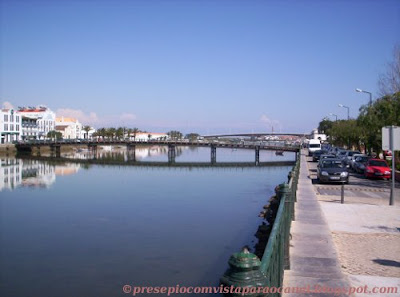
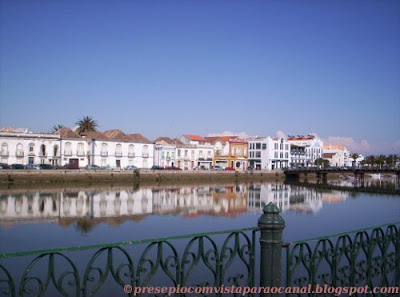
She begins to say that Tavira is known as Portugal's Venice...

We can see why ;-)

From Portugal


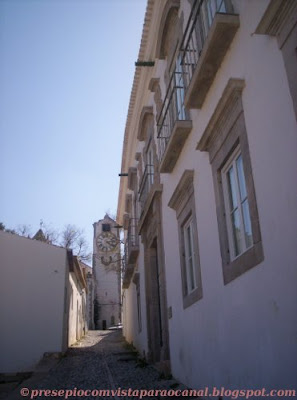
She says that Tavira is the most beautiful town in Algarve ...

Let's see ;-)

From Portugal


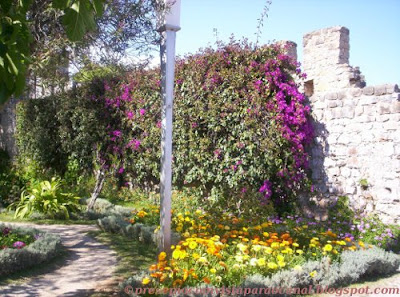
Here, in the Castle, with its beautiful gardens...

From Portugal


From Portugal


From Portugal


From Portugal


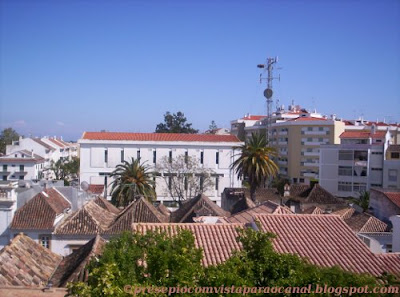
(the typical "scissors" roofs of Tavira)

From Portugal


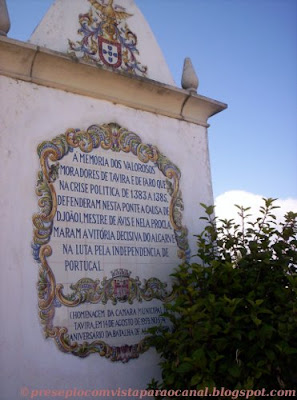
In the main square, this monument to the memory of the people of Tavira who had helped King Dom Joao I to secure our independence in the Crisis of 1383-1385.

From Portugal


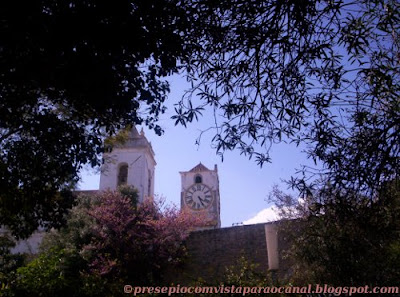
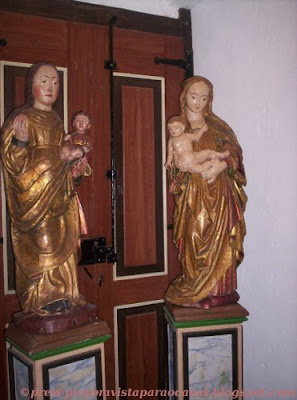
...also a very catholic town with many churches and cloisters...

From Portugal


And I must say, I agree with her...Tavira "is het mooiste stadje van de Algarve" ;-)

From Portugal

More Palaces in Sintra:Pena and Seteais...

Sintra...

3. Palacio da Pena/Pena Palace

Ergue-se la no alto...It stands on the high ...

I took this photograph at the top of the gardens of the Palace, where Queen Dona Amelia used to sit to enjoy the panoramic views. They call those stones, the Throne ...

From Portugal


"The palace stands on the top of a hill above the town of Sintra, and on a clear day it can be easily seen from Lisbon and much of its metropolitan area. It is a national monument and constitutes one of the major expressions of 19th century Romanticism in the world. The palace is a UNESCO World Heritage Site and one of the Seven Wonders of Portugal. "

(From Wikipedia)

The magic is bigger when it gets clouded by the fog ...

From Portugal


Please click on the first link of this post to see the fotos of the magnificent rooms and exquisite art pieces...

"In 1838, as King consort Ferdinand II, he decided to acquire the old monastery, all of the surrounding lands, the nearby Castle of the Moors and a few other estates in the area. King Ferdinand then set out to transform the remains of the monastery into a palace that would serve as a summer residence for the Portuguese royal family. The commission for the Romantic style rebuilding was given to Lieutenant-General and mining engineer Baron Wilhelm Ludwig von Eschwege. Eschwege, a German amateur architect, was much traveled and likely had knowledge of several castles along the Rhine river. The construction took place between 1842-1854, although it was almost completed in 1847: King Ferdinand and Queen Maria II intervened decisively on matters of decoration and symbolism. Among others, the King suggested vault arches, Medieval and Islamic elements be included, and he also designed an exquisitely ornate window for the main façade (inspired by the chapter house window of the Convent of the Order of Christ in Tomar)."

(From Wikipedia)

The Gardens...

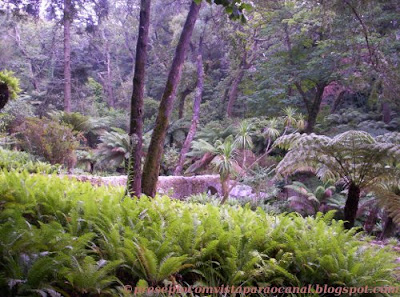
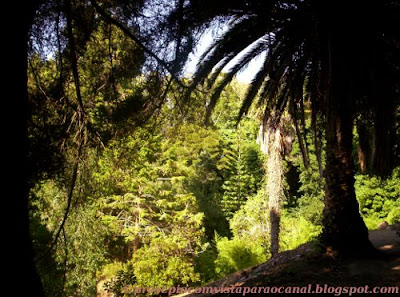
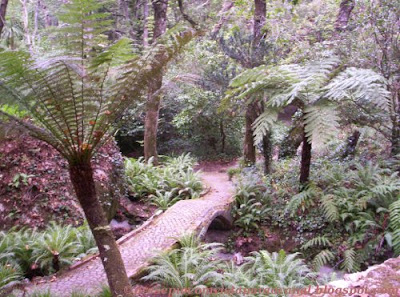
Os Jardins deste Palacio sao luxuriantes e encantadores, plenos de recantos, pontes, lagos, arvores frondosas, cisnes, estatuas,...

From Portugal


From Portugal


From Portugal


"The exotic taste of the Romanticism was applied to the park as it was to the palace. The king ordered trees from diverse, distant lands to be planted there. Those included North American Sequoia, Lawson's Cypress, Magnolia and Western Redcedar, Chinese Ginkgo, Japanese Cryptomeria, and a wide variety of ferns and tree ferns from Australia and New Zealand, concentrated in the Queen's Fern Garden (Feteira da Rainha). The park has a labyrinthic system of paths and narrow roads, connecting the palace to the many points of interest throughout the park, as well as to its two gated exits."

(From Wikipedia)

From Portugal


From Portugal


From Portugal


From Portugal


I leave you with the roses of Queen Dona Amelia ...

From Portugal


...is now late afternoon, so you must go to ...

4.Seteais...

"The Seteais Palace is a neoclassical palace located in Sintra, Portugal. The palace is nowadays a luxury hotel, restaurant and a tourist attraction included in the Cultural Landscape of Sintra, listed as World Heritage Site by UNESCO."

(From Wikipedia)

and follow the advice of Tessa de Loo: take a glass of port on the terrace ...:-)

"Niets is fijner dan aan het eind van de middag op het terras van de Quinta de Seteais (in de 18e eeuw gebouwd door een Hollandse koopman, Braamcamp geheten) een glas port te drinken."

Vale a pena, sei por experiencia propria, pena que nao tenha nenhuma foto desse fim de tarde....

Sintra tem muito mais para visitar:praias, serra, miradouros, e locais unicos como o Convento dos Capuchos e a Quinta da Regaleira....

See this post in the blog Dutched Pinay about Quinta da Regaleira and Seteais Palace...amazing fotos, by the way...

Sintra is unique ... not surprising, therefore, that has enchanted writers like Hans Christian Andersen or Lord Byron, as stated, well, Tessa de Loo.

"De romantische sfeer trok ook schrijvers en dichters uit den vreemde aan, als Hans Christiaan Andersen, Lord Byron en William Beckford, die een geestig dagboek schreef over zijn verblijf."

Let us therefore follow the example of these writers ...

Have a wonderful time in Sintra!

Monday, 25 January 2010

"Reizen door Portugal is reizen door het verleden", Tessa de Loo

Portugal: The Oldest European Nation...

"Reizen door Portugal is reizen door het verleden."

(Tessa de Loo, nederlander writer, who has been living in Portugal since the eighties.)

" Viajar por Portugal e viajar pelo passado." diz-nos Tessa de Loo, autora do celebre romance De Tweeling (1993), que vive em Portugal desde os anos oitenta.

Tessa de Loo tells us about her trip in the south of Portugal in Byblos Reizen.

Tessa was in the magical town of Sintra, nearby Lisbon...

"In Sintra herinneren paleizen en quinta’s temidden van weelderige parken en tuinen eraan dat hier ooit de zomerresidentie van de koningen en de adel was."

Tessa de Loo comeca por nos falar de Sintra, dos seus palacios (paleizen) e quintas, rodeados por luxuriantes (weelderige) parques (parken) e jardins (tuinen), onde os reis (koningen) e a nobreza (adel) se alojavam no Verao.

Let me show you what she is talking about...

1.Palacio Nacional de Sintra/ National Palace of Sintra

The only surviving palace of the Middle Ages and Royal Residence for more than six centuries.

From Portugal


Click on the links below to see the beautiful fotos of the rooms:

Sala dos Cisnes;
Sala das Pegas;
Sala Arabe;
Sala dos Brasoes;
Quarto D. Afonso VI;
Capela Palatina;
Cozinha;


and, of course, the exquisite tiles of the Palace...

So, did you like the fotos? What is your favourite room? Did you notice the Arabic influence in the tiles? :-)
Have you ever been in this Palace? How was your experience? If so, please tells us about ;-)

2.Palacio de Monserrate e os seus jardins luxuriantes/ Monserrate Palace and Gardens

"It was built in 1858 for Sir Francis Cook, an English baronet created visconde de Monserrate by King Luís. Monserrate turned to an English architect, James Knowles Jr., for designs. Though its Moghul-inspired details are unique in Portugal, its eclecticism is a fine example of the Sintra Romanticism."

(From Wikipedia)

From Portugal


From Portugal


From Portugal


From Portugal


The Monserrate Palace was visited by Lord Byron, an english poet of the 19th century.
He was there in 1809 as you can read in his poem "Childe Harold's Pilgrimage".

Please, click here to watch some slides about this magnificent Palace.

(to be continued)
Saturday, 23 January 2010

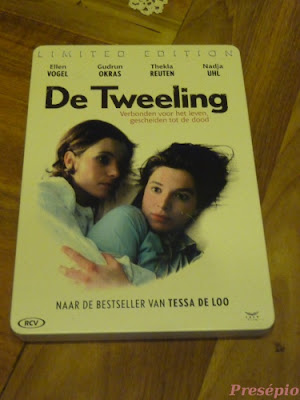
De Tweeling e da minha vontade de ler em Neerlandes

"Everyone was glad the war was over. It was time to celebrate! Nine months later a baby-boomer was born in Bussum. That was me. "

From: http://www.tessadeloo.nl/Submenus/Engelse%20site/Biography.htm

É assim que a escritora neerlandesa, Tessa de Loo, autora do célebre romance De Tweeling (1993), comeca a sua biografia no seu site oficial. Com humor! ;)

Há dois meses, vi o filme (2002) baseado no livro acima referido de Tessa de Loo. Fiquei calada por uns momentos quando terminei de ver. Gostei muito. Tocou-me. À Macau, agradeco por tê-lo sugerido.

From Coisas Minhas


Gostei tanto do filme que decidi ler o livro em Neerlandês. Quero conhecer a autora nas nuances, no sentido de humor, na ironia, na emotividade da escrita, nas expressões idiomáticas.

Sinopse do livro:

"Two elderly women, one Dutch and one German, meet by chance at the famous heath resort of Spa. The recognize in the other their twin sister they believed to be lost. They begin to tell each other their life stories - the last chance to bridge a gulf of almost seventy years.

Born in Cologne in 1916, the twins are brusquely separated from each other after the death of their parents. Anna grows up with her grandfather, in a primitive farming and Catholic milieu on the edge of the Teutoburgerwald. Lotte ends up in the Netherlands because of her TB, living with an uncle who harbours strong socialist sympathies. Bad relationships between the families and the intervening war cause the contact between the two sisters to be broken. When their paths cross again so late in life, Lott, who sheltered Jews in hiding during the war, is initially extremely suspicious of her newly-found twin sister. But through Anna's painful stories she is confronted with the other side of her own reality: the sufferings of ordinary Germans in wartime."

From: http://www.tessadeloo.nl/Submenus/Engelse%20site/Vertalingen.htm#twins

From Coisas Minhas


Decidi mais. Decidi que quero saborear na sua língua materna, os poetas e os escritores do país que me acolheu.

Vai exigir muito trabalho, muita hora de volta do dicionário, mas o gosto pela literatura impulsiona-me a aprender a língua.
Irá ser um trabalho demorado, mas também por isso, mais saboroso, mais pessoal, com a minha própria agenda e o meu próprio ritmo. Com gosto e muito gozo ;)

Curiosidade: Tessa de Loo vive actualmente e desde os anos 80, em Portugal, mais precisamente, em Loulé.

E porque eu gosto de descobrir pontes entre os dois países, este factor acabou tambem por me motivar ainda mais.

Da viagem da autora em Portugal, falarei no próximo post.

Ainda outra curiosidade: há dias, em Den Haag, cruzei-me na rua, com Ellen Vogel, a actriz que interpreta no filme, o papel da idosa Lotte.

Sorri perante a surpresa :-) Sabia que a senhora tinha nascido lá, mas nao estava a espera de encontrá-la :-)


Bom fim-de-semana!

N.B.: De Tweeling está editado em Portugal pela Quetzal Editores.