Showing posts with label My A-Z Netherlands. Show all posts

Tuesday, 17 November 2015

My A-Z of the Netherlands: "P" is for Postcards


Nota Prévia:

Este post segue em inglês, uma vez que esta série de post's, My A-Z of the Netherlands, foi assim iniciada, em 2012. Entretanto, por motivos vários, não tive oportunidade de dar continuidade a esta série. 

Até à data, foram publicados os seguintes post's da série My A-Z of the Netherlands:
"V" is for Veterinary Costs;

O post que se segue foi escrito em 2013. O tema? Esse gosto tão holandês pelos postais, onde parece existir um para cada ocasião. Dado que o Natal está à porta e algumas pessoas gostam de enviar postais nesta quadra, pareceu-me ser boa altura para, finalmente, publicar este My A-Z of the Netherlands: "P" is for postcards. Enjoy!

Until I left Portugal in December 2007, writing postcards was no longer a habit. One could find postcards for Christmas, Easter and birthdays, but I don't recall finding any for other special occasions like a graduation or a new house, getting a driving license or sending best wishes in case of illness, as I have found in the Netherlands when we arrived here. This country offers a wide variety of postcards, almost one for every single occasion and making postcards is also a very common hobby.

Lately, I sent some Dutch postcards to my beloved ones. Let's take a look?

The "Bedankt" postcard

The postcard below was sent to my godmother to thank her for sending me an Agatha Christie's book. Very pretty, don't you think?


The "Geslaagd" postcard

In the Netherlands, a "Geslaagd" postcard is offered to those who have finished their high school studies with success. A moment of pride for the families, it is also a kind of national celebration. If you see a school bag and the national flag hang on in a house, you know that someone over there have concluded their compulsory studies with sucess. However, I use them on other similar occasions. This one I sent to a blogger friend who graduated as a PhD. ;-)


The "Te Laat" postcard

I find very amusing the "Te Laat" postcards. This one I sent to my cousin A. to apologize for my delay to congratulate her on her birthday. 


The "Jaring" postcard

The postcard bellow I sent to a friend for her birthday last May. By then, she was unemployed in spite of her high education level and her 14 years of work experience. In our mail exchanges, I noticed that she was sad  - she said she had no special reasons to celebrate her birthday - and I wanted to cheer her up a bit. In this postcard, it is written: "Dear friend, Your birthday party doesn't last long enough to celebrate how special you are."


The "Nieuw woning" postcard

Life brings many changes like to move to a new house or come back to our homeland. This postcard I sent to a friend couple who returned to Poland to wish them much happiness in their new house (woning).


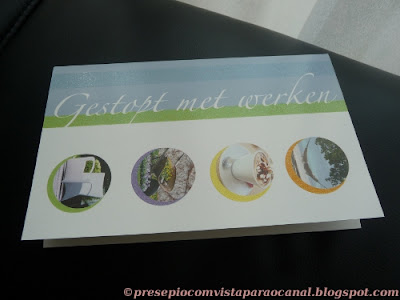
The "Gestopt met werken" postcard

This postcard is generally sent to someone who gets retired from his/her work. It was the case of A.'s father and I bought this one to send him. Now it is time to enjoy more what life has to offer, relax and have fun!


Have you enjoyed the postcards I sent?


Dutch postcards also reflect specific cultural aspects of Dutch society.


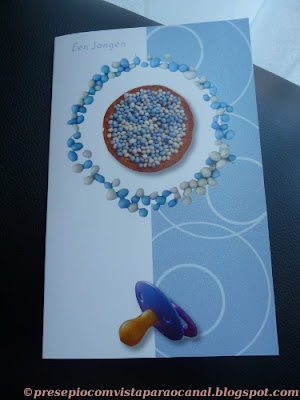
The "Beschuit met muisjes" postcard


If a friend couple of ours has a baby boy, we should offer them a postcard like this; in case of a baby girl, the same postcard in the pink version.

"Beschuit" means rusk and "muisjes" little mice, which, in this particular situation, are aniseed sprinkles, symbol of fertility and considered to be helpful during the lactation period.
Generally, the happy couple offers these rusks to the family and friends visiting the new born baby.
The topping could also be orange in case of a Dutch Royal child.


The "Zwemdiploma" postcard


Being the Netherlands a country of many channels and lakes, it's necessary that Dutch children got swimming lessons at early age for safety reasons. Imagine if they fall on the channel nearby when they are playing on the grass with their little friends, for example...

There are three levels they must achieve: A, B and C. , also known by the "Dutch ABC Certification". Getting the swimming diploma is a very important moment for the child and the parents. 
Most probably, the child will receive a postcard like this one to celebrate this important achievement.


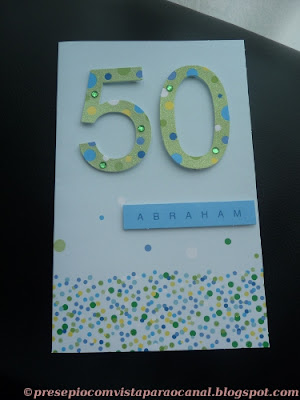
The "Abraham" and "Sarah" postcards

If a man is turning 50 years old, he receives a postcard congratulating him for becoming Abraham. If it is a woman, she receives a postcard congratulating her for becoming Sarah (Bible characters). Aging in the Netherlands is considered a normal process of life. More than this, it is something that is valued and treasured.


Other special occasions
(the following postcards are from my private collection)

The "Zin in een date?" postcard

I told you that the Dutch have postcards for every single occasion, remember? Even to invite someone for a date...;-)


Or to invite a friend for something funny...


The "Samen Wonen" postcard

And if you want to ask that very special person to live together with you, why not to do it with a beautiful postcard such as this one? ;-)


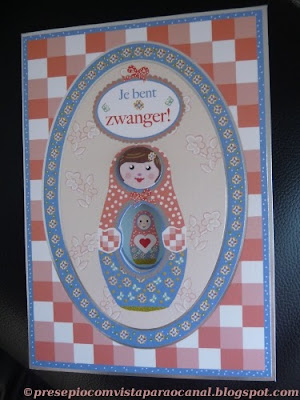
The "Je bent zwanger" postcard

If a close friend gets pregnant, most probably she will receive a postcard like this one to congratulate her on this such special moment of her life.


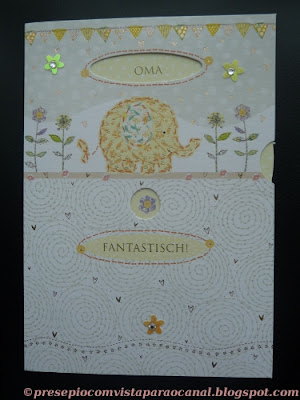
The "Oma"/ "Opa" postcards

And if you want to congratulate the grandparents, there are also postcards available...


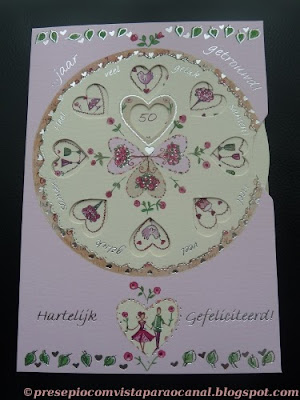
The "Jaar getrouwd" postcard

I like these postcards too because we can chose the number of years that applies on the situation (how many years of marriage). Very lovely to offer to our parents and grandparents.


The "Beterschap" postcard
The best wishes postcards are generally given to someone who is ill at home or in the hospital. This is very funny one, don't you think?


The "Welkom Thuis" postcard

I find these ones very lovely too, specially if a love one is returning home from the hospital or from a long trip.


The "Nieuwe Baan" postcard

A friend gets a new job and you want to show that you share his happiness. What about to send him a postcard?


The "Rijbewijs" postcard

If someone gets its driving licence, it's also easy to find out funny and cute postcards in the Dutch bookstores. I like this one with an old car.


The "Tot Ziens" postcard

In case we need to say goodbye to someone - a work fellow, a friend who goes to live in another country, etc -, it's nice to offer him a postcard like this, wishing him good luck and safe journey and telling him that it was nice to meet him and we hope to keep in touch.


Do you like to send postcards?
Friday, 14 June 2013

My A-Z of the Netherlands:"E" is for Expatriation/Emigration


“Your visions will become clear only when you can look into your own heart. Who looks outside, dreams; who looks inside, awakes.” 


"Did I dislike living in the Netherlands? No. And yes. I liked the Netherlands. The Netherlands did nothing wrong to me. As a matter of fact, let me explain this a bit because it's certainly not a simple experience that I had. My experience there overall [both good & bad times] really opened my eyes. The world could totally be something else than what I had thought or was used to. It taught me a lot about myself too because I constantly found myself looking at how I felt, feeling and looking at it from within more often, which is something I guess I normally did but never consciously realized." (the bold is mine)

http://atouchofdutch.blogspot.nl/, June, 4 )

How I see a lot of myself in this last sentence...

I never been so in touch with my own feelings as during these last five years.


Moving to the Netherlands was quite a challenge for me since it never crossed my mind to live here. Suddenly the opportunity happened and we decided to come. We didn't think too much about the cold Winter ahead,  the language difficulties or about the lack of friends and family here. We just came. In fact, we felt that we needed to gain some distance from the world that we always knew and to find new ones, broaden horizons, take some challenges. Looking at our life then, there were too many signs telling us to move, to change, to dare...

In our first months here, I felt like the "legal alien" sung by Sting in "An Englishman in New York". I felt, deep under my skin, the cultural shock.

I don't drink coffee I take tea my dear
I like my toast done on one side 
And you can hear it in my accent when I talk
I'm an Englishman in New York

I felt stretched, challenged. Even by Nature...

I never experienced in my entire life such cold temperatures, strong winds, short days and such lack of sunlight. I missed too the natural and cultural Portuguese landscape diversity. Every time I took the train, I found the landscape monotonous and the towns similar to each other.

I was not used to have only a sandwich, a salad or a soup with butter for lunch. I felt hungry many times specially during the first month when we lived in a hotel in Amsterdam  I missed the Portuguese easy way  to find a hot delicious homemade lunch in every street corner for a very affordable price and I also cried for a decent coffee.

I disliked the houses too, specially due to the concrete walls and ceilings.

Many times, I  felt confused and lost because I didn't know the language.Or in the train station when listening to the announcements or when receiving formal letters.

The shops opening time is also different from Portugal. Once I left home on a Monday morning to go shopping and all the stores were closed. So I returned home empty handed...
.
I began to feel fragile...


On and on the rain will fall 
Like tears from a star like tears from a star 
On and on the rain will say 
How fragile we are how fragile we are 
How fragile we are how fragile we are

Suddenly I noticed I had no Dutch references (except some knowledge about the Dutch Golden Age and some painters). I never heard about their newspapers or magazines, I didn't know anything about their music, poets and writers, cinema, bookstores or gastronomy. I was living in an unknown world. I had no links, no references. "Where do I start? What do they listen to here? What do they read?". My cultural references were English and French, not Dutch.
Along with this sense of being lost, I realized I didn't know anybody here to go out and to enjoy a coffee with. In my first weeks here, I wondered many times about whom to call in case of need... You must remember we were in December, a very cold month, the days were shorter and people chose to stay at home enjoying the evening with their usual friends and family. In these circumstances, it's more difficult to make new acquaintances than in the Spring when everybody is outside in their balconies or backyards and it's easier to start a conversation (about gardening, pets, children, you name it).
This period was quite hard on me: I found myself experiencing  the darkness of the days, the lack of references and a great loneliness, everything at the same time...
In the following Spring, I started the Dutch classes in Utrecht. Most of my classmates knew a bit of the language - or they were living here for 4 or 5 years or their partners were Dutch - and the teachers usually spoke to us in Dutch. I had no clue about the language and the sound of the words sounded very harsh to me. I felt like a child again, learning the first words. In the meantime, I discovered I had several serious health issues to take care of and I had no luck with the doctors. So...

I needed to find a way to feel better, happier...


Turn the clock to zero, boss 
The river's wide, we'll swim across 
Started up a brand new day

I focused on my internal skills. "What do I know about myself at this moment that could help me in the present situation?" I knew I had a strong curiosity, I enjoyed to learn and I was a hard worker. Ok, then. Let's do it! Let's start learning. I began to design some travel itineraries. I wanted to find out my favorite places here as I had in Portugal. I decided to participate in the local festivities and traditions too. Step by step, my connection with the country became stronger. I also decided not to mix only with Portuguese or expats. I wanted to mingle with the locals too.Along this process, I felt I was in secondary school again: learning a new language, a new geography, a new history, a new landscape, a new society...Some moments were very hard for me, but during this process I became stronger, since I learnt a lot about myself and what I should do to become happier.

I learnt (only to give some examples.)....

abdication - of the regular sunlight, the delicious Portuguese food, the coffee, the landscape diversity, the  plaster of the Portuguese houses, the wide variety of medical private practice, the possibility to go directly to a specialist doctor, the Public Health Care co-payments ( I love you taxas moderadoras! If you only knew how much I pay here even not visiting the doctor all year long...)
acceptance - of the wind, of the inconveniences caused by snow, of the cold, of the lack of fish diversity, of the expensive compulsory health insurances, of the fact that I'm not sharing in person some important moments of my dear ones in Portugal,...
to slow down -  the Dutch have a more balanced life, there are more chances to work in part-time, there is respect for housewives work, it's expected that you enjoy some quality time, the word gezellig (pleasant, cozy) becomes part of your way of life...
to be more gentle and not so demanding with myself - many times, I was told by my Dutch friends that I was trying to do a lot of things at the same time and in the hardest way.And they were right.
to be more patient with myself - take my time and give me the time I really need.
to wait - for my Dutch language skills, to have strong friendship ties, to see the house ready, for the Summer holidays, for the Dutch waitresses in the restaurants and cafes, for the sun,...
to say "no" (and this one, for me, was very difficult to learn).
to live day-by-day and make the most of the present day.
to enjoy the sun to the fullest when it comes.

Currently, I like to live here as I liked to live in Portugal before. I enjoy both countries for different reasons. I have a more sensory relation with my homeland: the smells (specially of the fig trees), the taste of the food, the sun in my skin, the sound of the waves, the wines, the mountains. In the Netherlands, I like the way how they celebrate life and make the most of it, enjoying every moment to the fullest. The Dutch taught me to accept life as it is. Don't fight or argue with life. Live it! If it is snowing, no problem. They light candles in their living rooms and invite some friends and neighbors for a nice cup of coffee. If it's sun, oh! these are the glory days: let's lay down on the park or in the backyard, drink a glass of white wine, make a barbecue. The most important is to enjoy it while it last!

How did the Netherlands change my everyday life?

I live in a house with a front and backyard.

I learnt how to paint a house (the walls). Here most people paint their own houses. I painted our former house in Almere Centrum and now we are painting this one too.

I learnt only to keep the essential. This house is smaller than all the others where we had lived in before. So I needed to give away most of our things because they didn't fit in here. The bedrooms and the bathroom are smaller, the kitchen is open to the living /dining room, there is no hall, but a narrow corridor and the house has no attic.

I learnt a bit of gardening. I have already painted fences, cleaned brick pavers with a water pump machine, planted hydrangeas, camelias and daisies. I love gardening and garden centers.

I learnt the importance of a nice neighborhood specially when we are away from our family and friends.

I learnt to enjoy a light lunch.

I restarted cycling.

I restarted my strolls.

I started a blog and to photograph on regular basis.

I travel more due to the central location of the country.

I feel integrated,  I speak a bit of Dutch and...

I have already my favorite things in the Netherlands...;-)

My favorite movie: "De Twelling"
My favorite singer: Wende Snijders
My favorite magazine: Daphne's Diary
My favorite restaurant: Pulcinella
My favorite pastry: Poffertjes
My favorite dish: Erwtensoep
My favorite town: Bredevoort 
My favorite natural reserve: Oostvaardersplassen
My favorite amusement park: Efteling
My favorite event: Dickens Festijn in Deventer
My favorite moment: a sunset in the Marken dam.
My favorite tradition: Sinterklaas
My favorite Dutch expression: "Dank je wel!"

I'm crossing now - in spite of the economical crisis in Holland and in Europe - a path of fields of gold: I feel more open to life, more self-confidant, more courageous. Let's see what future brings, here or elsewhere...
; - )

Stay well and warm!


God, grant me the serenity to accept the things I cannot change, 

The courage to change the things I can, 
And wisdom to know the difference.
Amen.


Sunday, 3 February 2013

My A-Z of the Netherlands: "V" is for Veterinary Costs


Due to my lack of time, I didn't have the opportunity to go forward with "My A-Z of the Netherlands" last year. As you may remember my last post about it dates from March. 

Therefore, I will try to make up to you this year. This time I will follow a different strategy: not writing according to the alphabet order, but according to the events that happen in my everyday life. 

I have written 3 posts until now : "A" is for Almere, "B" is for Bikes and "C" is for Children. This time, we will give a huge jump: "V" is for Veterinary Costs.

From Almere (III)
(Fofinho in our back yard 3 years ago)

As you may know, my 16 years old cat has been ill with kidney and heart problems. This week, I went with him to the veterinary clinic. We were there for the last time in November and Dr K. was very pleased to see Fofinho again. She has asked me a couple of weeks ago to make a new appointment for Fofinho since she would like to check him up again and see how he has been doing.

Well, we have good news! For the first time, since Fofinho got ill last July, he hasn't lost any weight. In fact, he has more 50 gr and now he weighs 2700 kg. His heart is more relaxed too. Only his blood pressure needs to slow down a bit. Dr K. was very happy to see how Fofinho looked more active and stable. She said to me it would not be necessary to repeat the blood tests for now , but it would be advisable to do it in June.

Now, that Fofinho is better and I'm more relaxed with this situation, I would like to share with you some useful information related to the overall veterinary costs: doctor's appointments, medication, exams, treatments and food. Many of our readers are from Portugal and, as we know, emigration has been increasing in our country. So, if you are Portuguese, you are thinking about emigrating to the Netherlands and you would like to bring your cat with you, I hope this information will give you an idea about the overall veterinary costs.

This is only my experience. I don't know if the costs are more or less the same in other Dutch cities/provinces, but you can compare this information with the costs  that you have in Portugal and decide what is the better option for you - to bring your pet with you or to let him with your relatives (temporarily or not).

Fofinho's Veterinary Costs

(The current VAT for appointments, exams, treatments and pets food is 21%, but until last September was 19%. The medication's VAT is still 6%)

Check-up (last appointment): € 38.50

Evening appointment (July 2012): € 65

Medication

For the blood pressure: Norvasc (€5.25) + suspendeergel 30 ml (€4.60) + syringe (€0.30) = € 10.15

He has been taking 1 ml /day. That means each small bottle (this medication is prepared by the vet) is for 30 days. But now his vet told me to give him 1.25 ml /day.

For the heart: Atenolol  € 10.40 (each 40 days)

For the kidneys: Benakor € 16.90

The fluids for the kidneys: 4 units of Lactetrol 500 ml  (€33.40) + 8 needles (€1.95) + infuussystem (€5.70) = € 41.05

We need to give him 120 ml every time. Lately, Fofinho is receiving fluids once a week, but during the last 5 months, he received fluids 4 times a week, that means 4 bottles/month (each one has 500 ml). Now, one bottle is enough for one month.

The laxative: Laxactrat  €13.40

I give him 3 ml /day, and only if he needs it. In the beginning, I used to give 15 ml/day because he weighed more.

Total cost/month (last January): € 76.10 (because Fofinho is now taking only one bottle of fluids per month)

Exams

Bloeddrukmeting (blood pressure measure): € 27.55 (last January)

Urine kit:  €19.40

Geriatric tests (urine and blood tests, included the thyroxine values): € 83.15

Ultrasound:  € 142.37

Except for the ultrasound, all the other tests were done more than once.

Treatments

Fluids administration by the veterinary: € 13.10
(since September the fluids are being given by us)

Giving an injection: € 7.75
(and then you must add the cost of the product given in the injection)

Microlax: € 7.25

Versifel RC (vaccine given once a year): € 58.80

Fofinho's 3 hours stay in the veterinary clinic: € 41.35


Hygiene 

Vet Aquadent 500 ml: € 19.85

I put 2 ml/day in the water.

Comb: € 5.00

Food

k/d kat can 156gr (1 unit of wet food): € 2.37

I buy 4 units/month. The vet advised me to avoid wet food because of Fofinho's teeth. I give him a tea spoon every afternoon as a snack and that's all.

k/d kat 1,5 kg (dry food): € 19.25

Enough for a month.

Total costs (last January): € 28.73

Costs evaluation:

January's total cost: € 170.80 (doctor's appointment and blood pressure measure included).
Expected cost this month: € 104.83 (without the doctor's appointment and the blood pressure measure).

I hope this information will help you. Nevertheless, check always with your veterinary the possibility of a health insurance for your pet - especially if he/she is young - and the extras associated with (like dental treatment, for example). Thanks, Teresa, for the tip!. ;-)

Have a nice week! :-)


Friday, 2 March 2012

My A-Z of The Netherlands: C is for Children


On 14 February 2007, the United Nations considered the Dutch children the happiest in the world. On December of the same year I arrived in the Netherlands. Let me share with you my first impressions on Dutch children.

1. MANY, MANY CHILDREN  in Almere

Mothers with two, three and sometimes four children by their hands. Absolutely fantastic! In the last two decades, I never saw so many children as here! It's amazing!


From Almere (III)

I used to live in Lisbon, a very beautiful city, but where the population is very old. Most of the young and middle age people working there are living in smaller cities nearby, where it is cheaper to buy an apartment. 
According to this study, in 2005, Lisbon was the portuguese city with the oldest population, and the European capital with the largest ratio of older people (134.000 per 564.000 inhabitants). As you can imagine, I was not used to see many children in the streets during the day. Unfortunately, the lack of children is not only a problem in Lisbon. Last month, the President of the Portuguese Demography Association, stated that Portuguese population is one of the eldest in the world. In 2007, 2009 and 2010 the number of births was lower than the number of deaths. Nowadays, most Portuguese couples have only one child.

2. DUTCH PARENTS ARE MORE RELAXED WITH THEIR CHILDREN

According to my experience in Portugal, my generation, in general matters, is very anxious with their children. These are overprotected in my point of view.
Here I find the parents careful enough, giving their children the opportunity to experience small adventures and solve their own small problems. A light injury is not seen as "a great disaster".

From Katwijk aan Zee

From Texel

3. CHILDREN PLAY IN THE STREETS WITHOUT ADULT SUPERVISION 

In my street, there are a couple of playgrounds for the children. Sometimes, there is an adult nearby, but most of the times, the children are playing together in small groups without an adult supervision. However, I perfectly understand that in Portugal probably we have more reasons to fear for our children's safety than in The Netherlands. Besides, Dutch mommies can always peek through the windows of their kitchens or stay in the front garden watching them.

4MORE CHILDREN IN PUBLIC GARDENS 

Well, I see more people in public gardens in general than in my country, at least when I was still living there. 

From A-Z

In the last 15 years, I realized that most of the Portuguese families spend their Sunday afternoons in shopping malls. I remember to find this very depressing! However, there was a park in Lisbon where I used to find many children: Parque da Serafina in Monsanto. 
In The Netherlands, I see more children playing outside which I think it's much healthier. The Dutch appreciate very much outdoor activities and besides there aren't many shopping malls here as in Portugal. 
Lucky me when I was a child! No shopping mall and no playstation! My grandpa used to take me for long walks in the woods or to pick up figs and blackberries. I used to play in the street and went a lot to the park to have picnics, like the Dutch still do.

From Texel

5. MORE BIRTHDAY PARTIES AT HOME

I see that by the front door decorations. I used to have birthday parties at home too. However, in Portugal, this tradition has changed. In the last 15 years, most of the children celebrate their birthdays at the malls or in rented indoor playgrounds. I don't like it, specially because of the lack of fresh air and the noise, always worse in a closed place. I also found myself thinking several times, that they are growing up without homely birthday memories. Sad, in my opinion...

From Pasen 2010

6. DUTCH BIRTHDAY PARTIES ARE MORE FRUGAL

On a Dutch table, we will find coffee, tea, juices, some snacks, birthday cake and sometimes pancakes. The most important, as far as I realized, is to be together with family and friends to celebrate the child's birthday. And if we think about it, that is what really matters.
However, I find the Portuguese traditions very lovely too. I have great memories of my birthday table full of different sandwiches, several cakes, puddings, mousses, jellies, arroz-doce, and Sumol, of course. Do you remember the Sumol green bottles? :-)
 

After my father's death and the economical crisis that Portugal faced in the end of the seventies and in the beginning of the eighties (IMF was there as it is today),  my mother couldn't afford big birthday parties as before. In those difficult times, I used to celebrate only with the family. If I was a Dutch child, I would have my big party, with many  friends and neighbours, in the same way. A lot of food on the table is not so important here as it is in Portugal. Only the juices, the birthday cake and some pancakes would be enough! No one would complain about my birthday party being "very poor"(you know what I'm talking about...).
.
7. CHILDREN GO TO SLEEP VERY EARLY, AT 7.00 OR 7.30 PM 

According to my experience, in Portugal, the children go to sleep at 9.00/ 9.30 pm.
I used to go to bed at 11 pm when I was child ;-))) My father had a restaurant, so I stayed more or less awake to see him in the evening. I remember to watch José Corte-Real on TV and then listening to the national anthem at the end of the daily broadcast.

8. CHILDBIRTH: HOME BIRTHS, MIDWIFES, ANAESTHETICS AND KRAAMZORG 

The Netherlands has a HIGH RATE OF HOME BIRTHS compared to other countries.
In 2010, 184 thousand children were born in the Netherlands. 

Three quarters were hospital births, one quarter home births. Most of them are attended by MIDWIFES. Early 2010, more than 2.5 thousand midwives were active in the Netherlands.

"Most midwives in the Netherlands work in primary care where they are the lead professionals providing care to women with 'normal' or uncomplicated pregnancies. They are independent practitioners, like general practitioners or family doctors, and work in single-handed, duo-, or group-practices. In case of complications or an increased risk of complications during pregnancy, during labour or in the postpartum period, the midwife will refer her client to secondary care, where a gynaecologist will take over responsibility. The indications for referral have been agreed upon by all professional groups involved (gynaecologists, midwives and general practitioners) and are laid down in the so-called Obstetric Indication List [2]." (http://www.biomedcentral.com/)

ONLY 10% of Dutch women (2009) use ANAESTHETICS in their labors.

"The rate of epidural use in the Netherlands is low and there is an absence of anaesthetists available out of ‘normal’ hours so do your homework to find out which hospitals can honour your request for pain relief." advise Amanda van Mullingen in Expatica.

The Netherlands has the worst scores in Europe related to childbirth rates according to the PERISTAT-II STUDY:

"In Peristat-II from 22 weeks gestation, after France, The Netherlands had the highest fetal mortality rate (7.0 per 1,000 total number of births). Of all western European countries, The Netherlands had the highest early neonatal mortality rate (3.0 per 1,000 live births). Over the past 5 years the perinatal mortality rate in The Netherlands has dropped from 10.9 to 10.0 per 1,000 total births but this drop has been faster in other countries."
Take a look at this post for further information.

KRAAMZORG is probably the main positive aspect of giving birth in The Netherlands.
We are talking about a week of postnatal care at home which includes caring for the mother and the baby, light household duties and guidance on breast feeding.

9. DUTH MOTHERS HAVE PART-TIME JOBS

Less than 10% of Dutch women work full-time. In Portugal, it's very difficult to work in part-time, except in call-centers. My friends are always exausted. They complain a lot about spending so little time with their children. They arrive (tired) at home around 8 p.m. and barely have the time to diner and put the children to sleep. In the Netherlands, the families  enjoy their time together in a more relaxed way. I don't notice either any prejudice against staying- at-home moms as I have noticed in Portugal. Also the fathers enjoy more time with
their children because of the weekly day they spend at home with them, the "famous" Papadag.

From Amersfoort
This photo was taken in the morning, a year ago, in front of a children's bookstore in Amersfoort. You can see a couple of mom's bikes very well prepared to carry their children on.

10. CHILDCARE IS VERY EXPENSIVE 

Take a look at this Teresa 's post. In this childcare center, for example, a day per week costs €284 per month, and five days per week about €1420. Are you still there? ;-)) Most of the children are in childcare on a part-time basis.You can know more about the Dutch Childcare System and the Childcare Allowances by reading this Expatica article.

11.THE EDUCATION COSTS  

Take a look at this  experience of a Portuguese mother living in Groningen.

If you are a mom in The Netherlands and you want to share your experience with us, please do. You are very welcome!
For those who are thinking about leaving their home country, I strongly advise you to get all the information you can about your future host country before your departure, specially if you have children or intend to get pregnant. Expat life is emotionally very demanding, even more with kids.


Friday, 10 February 2012

My A-Z of the Netherlands: B is for Bikes


When we think about The Netherlands, we think about bikes and cycling paths. It's one of the country's trademarks. This interesting video tells us how cycling became so common in The Netherlands almost 40 years ago.


I don't cycle like the Dutch do

I don't cycle when it's snowing, windy, rainy or cold. I generally take the bus. Almere has a very good bus network. The bus stop is just around the corner and every 7 minutes we have a bus to the city center. A much warmer and comfortable trip, don't you think? ;-)
I only use my bike for recreation purposes. I enjoy cycling, specially in the spring, nearby the canal. I stop here and there, have a picnic, watch the sunset, and come back. Heel leuk!
For the rest, I use the bus or the train. I don't need to use my bike as they show in the video below. However, I think it is very cool to do as they do it!


I don't have a long history with bikes

I had a bike when I was a child, but soon I stopped cycling. The primary school, as well as the high school, were just around the corner. Later, when I went to the University, the bus and the metro were my favourite means of transport. And they remain so for 20 years more.
My current bike was bought after two years living in The Netherlands. I didn't miss it at first because we were living in the city center. Everything was just there.

A sad episode

One day, I dared to go for a long ride and I even crossed a bridge. However, the experience didn't go so well. I was on the right side of the road when I saw that a motorbike was coming on the left side. So far, so good. I slowed down a bit. Then, another motorbike suddenly appears between me and the previous one and I saw myself with no space available to go forward. I was not expecting this and I got scared and fell. Nobody stopped or asked me if I was ok. Just for luck, my glasses didn't drop in the canal. Niet leuk! Now, I'm trying other routes. I have a lot of paths to discover yet.

The Dutch are Pros with their bikes

The Dutch are very professional when riding their bikes. I'm far from having their cycling confidence.
I don't see myself riding my bike and, at the same time, reading a sms, talking on the phone, reading a newspaper or holding an umbrella. For me, it's also difficult to stop at the stoplight, put the foot in the floor and then restart cycling. I need a sidewalk where I can lean on.

Everyday Life in a Bike


In this video, you will find very interesting moments, specially in the following minutes:

1.42  A lady riding a bike and watching her mobile phone.

2.20  A lady riding her bike with her bags behind and her child in the front.

5.09  A lady riding her bike with one child behind and another in the front.

5.28  A lady riding her bike with a front box and three children inside.

6.18  A lady riding a brommer, very useful for those who have problems with their legs or get tired easily.

7.53  Children, adults and old people cycling. This is Netherlands!!!

8.29  A housewife in her bike with several baskets.

8.34  A well dressed lady riding her bike, probably coming from her work.

Almere has an extensive cycling network

Almere offers great cycling conditions. An extensive network of free cycling paths covers the entire city. Bikes can be rented at Almere Centrum and Buiten train stations. The Spoorbaanpad in Almere is considered the longest urban cycle route of the country. The name means ‘Rail road path’ and refers to the fact that it follows the rail road for its entire length. For more details, please click here.


How we say "bike" in Dutch?

"Fiets"! You can't imagine my surprise when I've heard it for the first time. "That's so different!" I thought...

I would like to hear from you about your cycling experience in The Netherlands. Do you want to share it with us?

Friday, 3 February 2012

My A-Z of The Netherlands: A is for Almere


(about My A-Z challenge)

A is for Almere, of course. The city I chose to live in The Netherlands, I was still in Portugal.

Almere is the youngest city of The Netherlands. Situated in Flevoland, the most recent province of the country, its first house was finished in 1976. Named after the early medieval name of the Zuiderzee, this garden-city is now the 7th largest municipality in The Netherlands with 191,495 citizens (9 May 2011). Almere offers contemporary architecture, several parks, woods and lakes, an exciting cultural environment and a relaxing and balanced life. Annemarie Jorristma-Lebbink, a former minister, has been the mayor of the city since 16 August 2003. Her party (VVD) is the same one of the current prime-minister, Mark Rutte.

Almere is Contemporary Architecture...

Almere Centrum (where we lived in the first two years)

From Almere (III)

Tussen de Vaarten (our current neighbourhood)

Two Face, by the Dutch NIO Architecten.

From A-Z

The New City Center

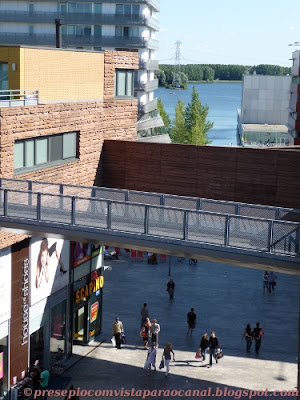
The Citadel (2006)

A shopping complex by the French architect Christian de Portzamparc.
A complex of 100 to 100 metres which is divided into four quadrants by two intersecting streets (for pedestrians). Above the car parks there are 50 shops. On top of the shops there are 46 colourful houses, and an apartment complex including 6 apartments and a parking lot for its residents. The terrace of La Place restaurant (on the top floor of warehouse V&D) provides a unique view of the Citadel.

From Almere (III)

From Almere (III)

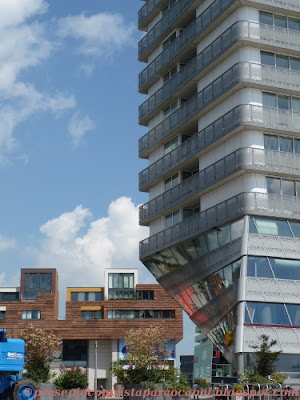
The Lakeside Tower (2007)

A building in front of the Weerwater Lake, of the architect Bjarne Mastenbroek (SeARCH, Amsterdam).

From Almere (III)

The Smaragd (2007)

 Apartments and a store (Hema) designed by Gigon and Guyer.

From Almere (III)

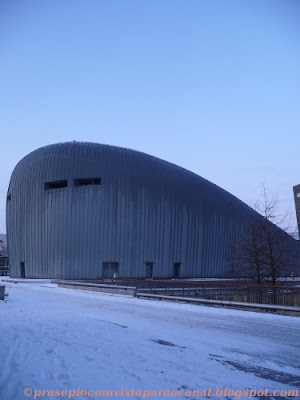
The Skyline of Almere

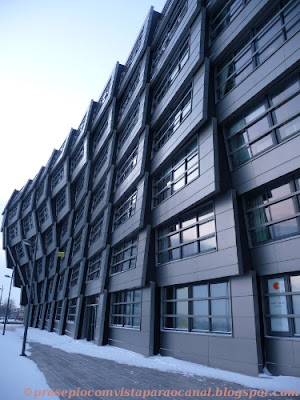
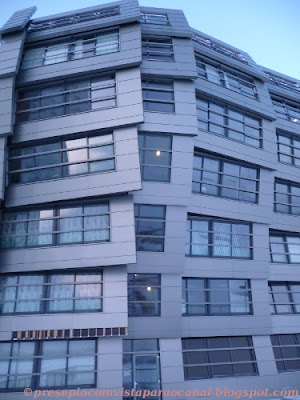
 The Wave (2005) by the Dutch architect René van Zuuk.
 A dramatic wave-like facade, covered with silver anodized aluminum plate.

From A-Z

From A-Z

From A-Z

Side by Side (2007)

Two residential towers by the Dutch architect Frits van Dongen.
The towers facades were made of light blue coloured industrial glass. In the base of the towers, there's a winter garden, sauna and gym, especially for the residents. Moreover, there's a private swimming pool (you can see it from the outside), overlooking the lake Weerwater.

From A-Z

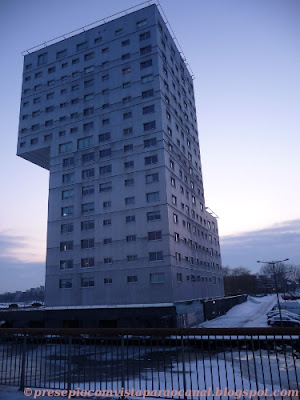
Silverline (2001)

An apartment tower designed by the Dutch Claus and Kaan Architects.
The top of this apartment tower surprisingly leans over lake Weerwater. However, the reason for this is simple: because most people like to live at the top or bottom of a tower, the top and foot of 'Silverline' is maximized, while the least interesting middle section is minimized.

From A-Z

Urban Entertainment Center designed by the British architect William Alsop.

Apollo Hotel (2008)

A block of approximately 4,000 m2, which includes the hotel rooms, floats eight metres above street level. It has a beautiful facade of cedar. This section is supported by columns. The entrance to the hotel is a blob with a brass cladding.

From A-Z

Muzinq / Discotheque NOX

A pop centre with three halls, one accommodating 1200 persons.

From A-Z

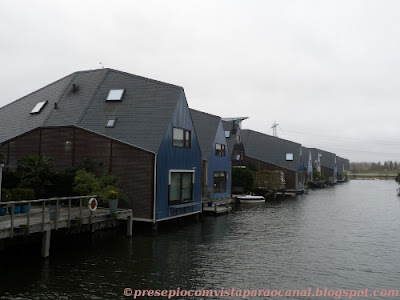
Almere Buiten

The Eilandenbuurt houses.
They remind us the Dutch Antilles and the maritime history of The Netherlands.


From A-Z

Almere is Cultural Life...

Almere's library (2010)

A building by the Dutch architects Meijer en Van Schooten.
De Nieuwe Bibliotheek was considered the Best Library of The Netherlands in 2010.


From Almere (III)

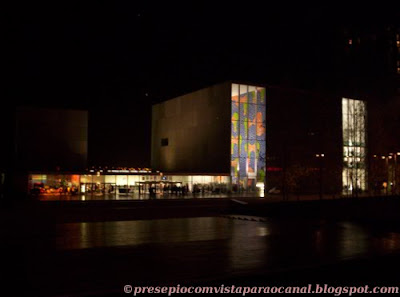
Theater and Arts Center (2006)

A building by the Japanese architects Kazuyo Sejima and Ryue Nishizawa (SANAA) that was officially opened by Queen Beatrix in 2007. Simplicity, transparency and light is what this building is about. From a single storey surface of 100 to100 metres, three halls (1050, 350 and 150 seats respectively)  extend into the lake Weerwater. The building users are the theater and the arts center, De Kunstlinie, that offers workshops of music, visual arts, theater, literature, dance and multimedia.

From A-Z

The Pasion Buena Vista Show, May, 2009 in Almere's Theater.

From A-Z

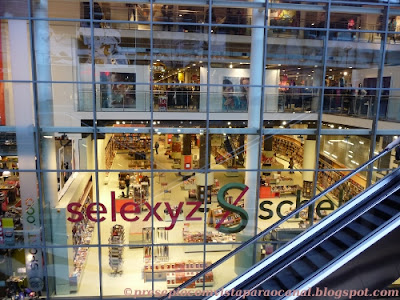
Almere's Selexyz Bookstore.
Bookstore of the year 2008-2009.

From A-Z

Almere is Fun...

A lounge in the city center to enjoy the sun.

From Almere (III)

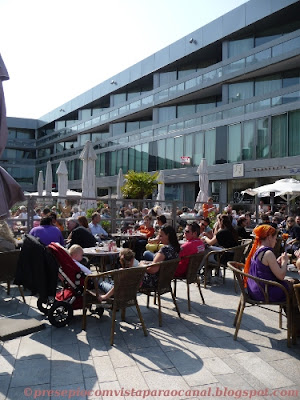
Enjoying Queen's Day in the several terraces of the city center.


From Koninginnedag 2011

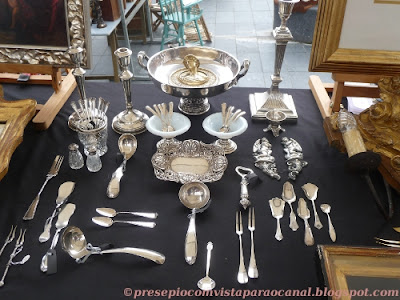
Selling old stuff in the streets on Queen's Day. Everybody can do it and it is a fun and nice way to get rid of the stuff we don't need anymore.

From Koninginnedag 2011
The restaurant Boat House in Noorderplassen.
I like to go there specially to watch the sunset.

From A-Z

Stoomboot Rondvaart
A very nice trip in a luxury steamboat.

From Stoomboot Rondvaart Almere Haven 2011

Almere Strand (beach)...


From A-Z

Skating in the Weerwater lake nearby the Theater.

From A-Z

An old passion...boats!! Muiderzand Marina in Almere :-)

From A-Z
Almere happens...

Midland Classic Show

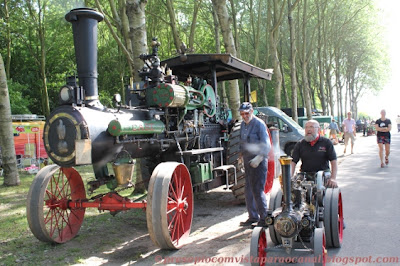
A fantastic exhibition of old cars...

From A-Z

Smaak Parade

A delicious event. We can taste cheeses, wines, and many delicacies.

From A-Z


From A-Z
Almere Haven Festival

In the oldest part of the city, a brocante en antiek markt.

From A-Z


From A-Z

Historisch Festival Almere

Also in Almere Haven nearby the beach.

From Historisch Festival Almere 2011

Almere is gezellig...

A city where it is a pleasure to live.

From A-Z

From A-Z

From A-Z

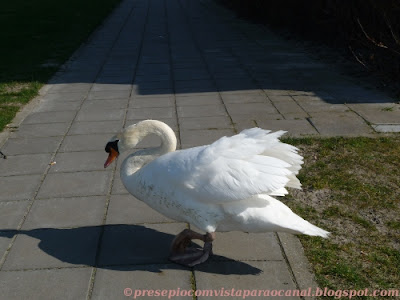
Swans in the sidewalks. :-)

From A-Z

Almere is Nature...

The fantastic nature reserve of Oostvaardersplassen.
And if you like to watch birds in particular, this is the ideal place to be.

From Almere (III)

From Oostvaardersplassen

A sunset in Almere Pampus.

From Almere (III)

There is much more to enjoy, like De Kemphaan, The Beatrix Park, and many other wonderful places.
In the video below, you will be able to watch more amazing buildings, woods and nice places in Almere to relax and enjoy with your family and friends.


I hope you have enjoyed this trip to Almere, our adopted city.
Take your train in Schiphol Airport and in 30 minutes you are here. Enjoy your stay!
Have fun! Veel plezier!!

(Source of the information about Almere's architecture: http://www.almerenjoy.nl/architectuur_stadshartEN.htm)